

Dana Point's Coastal Trails: A Walk Through One of California's Rarest Habitats
Most hiking guides focus on ocean views. Dana Point's trails tell a different story.
There is an animal living in Dana Point that scientists once believed was extinct. The Pacific pocket mouse disappeared from documented records for roughly twenty years before being rediscovered and emergency-listed as endangered in 1994. Today, only four wild populations remain, and the only publicly accessible habitat is found within the Dana Point Headlands.
That means some of Dana Point's most popular walking trails are more than scenic overlooks. They pass through a protected coastal conservation area preserved to protect rare wildlife, native plants, and one of Southern California's most fragile ecosystems.
Why Dana Point's Coastal Trails Are Different
Unlike many Southern California coastal paths, Dana Point's trails weave through nearly 60 acres of protected headlands habitat. The preservation of these open spaces ensures uninterrupted ocean views while safeguarding rare species and native coastal ecosystems.
Visitors can enjoy:
- Ocean bluff walks
- Whale watching viewpoints
- Family-friendly paved trails
- Nature interpretation opportunities
- Protected wildlife habitat
- Beach access connections
- Sunrise and sunset viewpoints
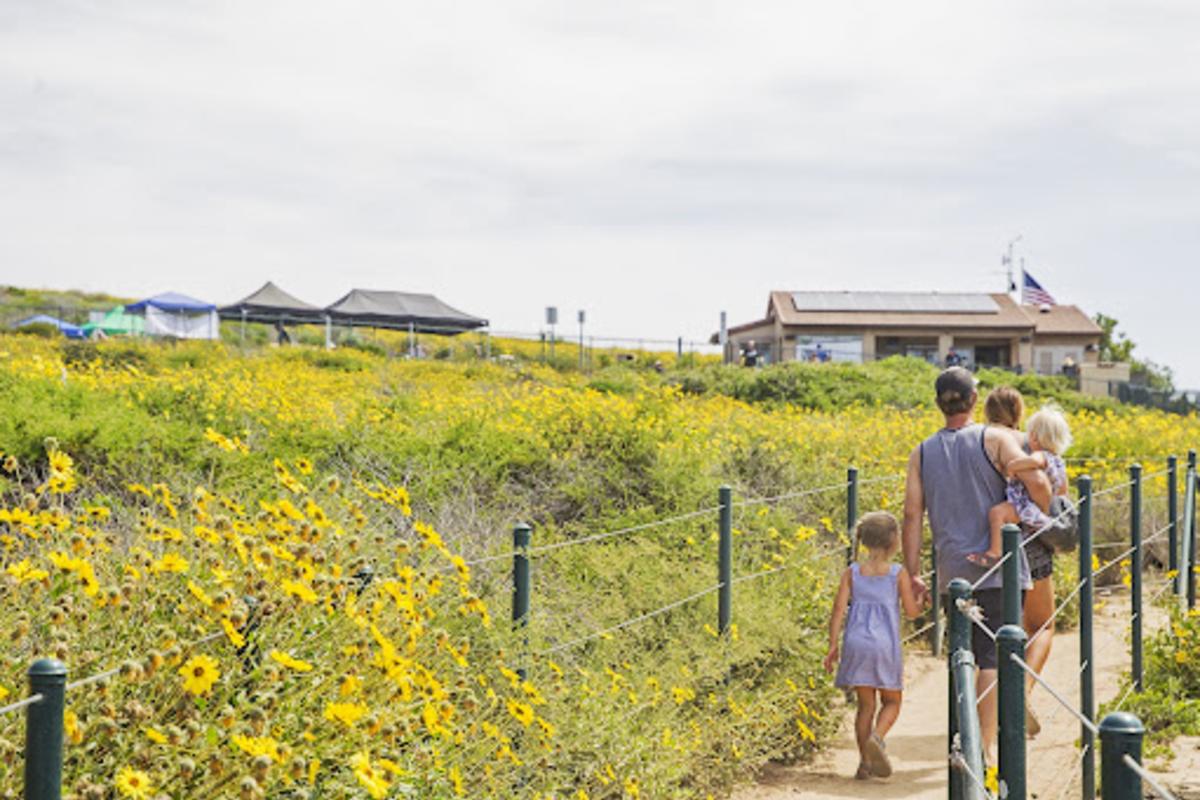
The Bluff Top Trail: The One Everyone Should Do First
If you only have time for one walk, start with the Bluff Top Trail.
Running along the cliffs above Dana Point Harbor, this paved and mostly level trail offers some of the best ocean views in Dana Point while remaining accessible for strollers, wheelchairs, and casual walkers. Its elevated position also makes it one of the top land-based whale-watching locations in the city. During early spring, migrating gray whales can often be spotted from the bluffs without ever stepping aboard a boat.
Explore the Dana Point Headlands Conservation Area
The Dana Point Headlands Conservation Area is what truly sets Dana Point apart from other coastal destinations.
Spanning nearly 60 acres across four connected conservation parks and approximately three miles of trails, the preserve supports more than 150 native plant and animal species. The landscape includes coastal bluff scrub, native grasslands, maritime succulent scrub, and coastal sage habitat that has become increasingly rare across Southern California.
A 29.4-acre preserve within the Headlands is permanently protected and serves as habitat for rare plants, the federally threatened coastal California gnatcatcher, and the endangered Pacific pocket mouse.
Before You Go
Dogs are not permitted anywhere on the Headlands trail system due to the area's sensitive wildlife habitat. Visitors should remain on marked trails to help protect the ecosystem.

Salt Creek Trail: For a Longer Coastal Walk
For visitors seeking a longer walk, Salt Creek Trail delivers a classic Southern California beach experience.
The trail descends from the bluffs toward Salt Creek Beach, providing panoramic coastal views before reaching the shoreline. The route connects easily with nearby beach access points and allows visitors to combine a trail walk with time on the sand.
Two More Trails Worth Exploring
Doheny State Beach Path
If you're looking for the easiest waterfront walk in Dana Point, head to Doheny State Beach. The paved beachfront path follows California's first state beach, which was donated for public use in 1931. Along the route, visitors can also enjoy the Doheny Whale Walk's marine-life artwork.
Aliso and Wood Canyons Regional Park
For those wanting more elevation and a traditional hiking experience, Aliso and Wood Canyons Regional Park provides longer routes and steeper terrain farther inland. The trade-off is fewer ocean views in exchange for a more strenuous workout.
The Geological Secret Beneath Your Feet
One of the most overlooked facts about Dana Point's coastline is that the bluffs sit atop uplifted marine terraces.
The flat paths found along the bluffs were once underwater. Visitors are not simply walking beside the coast. In a sense, they are walking across an older coastline that has gradually risen over time.
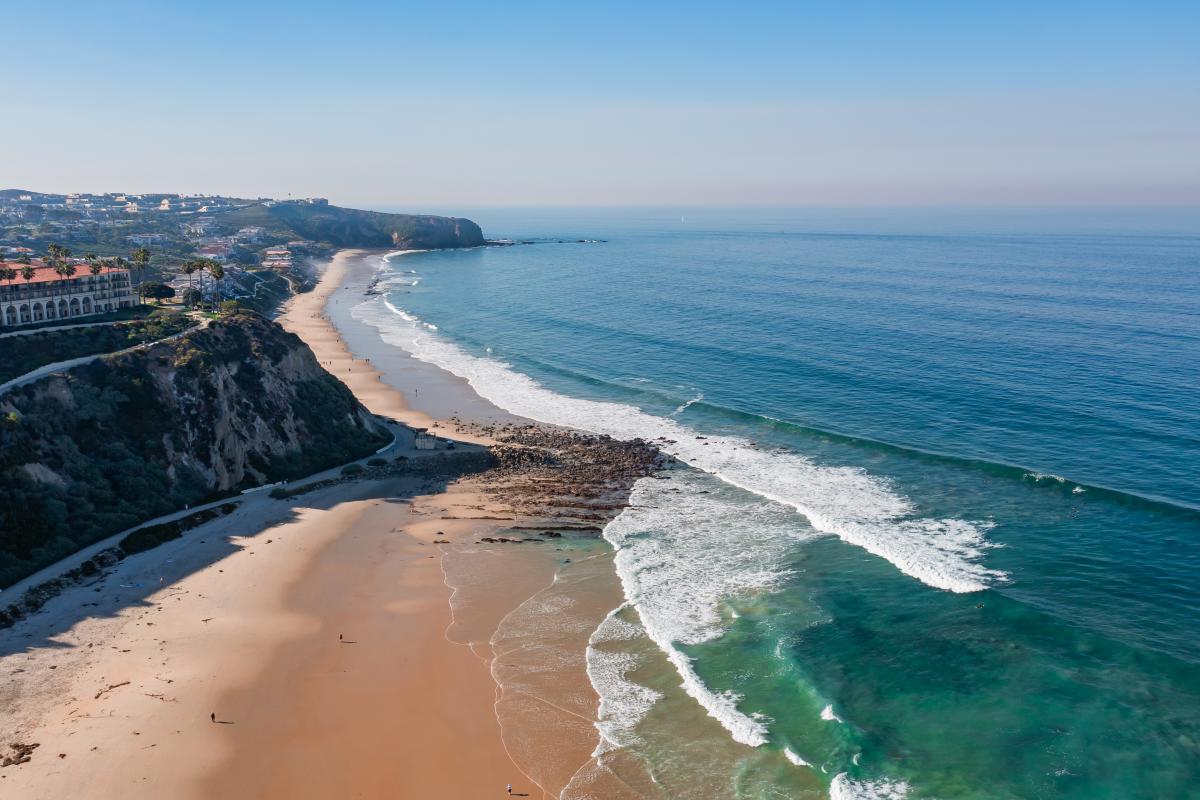
Tide Pools and Sea Caves: Go at Low Tide
Some of Dana Point's best exploring only shows up when the water goes out. At low tide, the rocky shoreline below the Headlands opens up into tide pools full of sea stars, anemones, and crabs, and the sea caves become reachable on foot.
Check the tide chart first. Aim for a low tide of about 1 foot or lower and arrive an hour before it. In fall and winter, the lowest tides often fall in the afternoon, which means tide pooling and sunset can go together.
Explore gently. Dana Point's shoreline is a protected Marine Protected Area. Look but don't take, don't flip rocks, and step on bare rock rather than living things. Wear shoes with grip, keep an eye on the incoming tide, and never turn your back on the waves.
What is the best trail in Dana Point?
The Bluff Top Trail offers the best combination of ocean views, accessibility, and whale-watching opportunities.
Are dogs allowed on Dana Point trails?
Most trails allow dogs, but dogs are not permitted on Headlands Conservation Area trails due to endangered species protections.
How long is the Headlands trail system?
The interconnected trail network spans approximately three miles across four conservation parks.
Are Dana Point trails free?
Yes. Most trail access is free. Parking fees may apply at Doheny State Beach.
Can you see whales from the trails?
Yes. The Bluff Top Trail is one of Dana Point's best land-based whale-watching locations, especially during spring gray whale migration.
What protects the Dana Point Headlands?
The conservation area protects nearly 60 acres of rare coastal habitat, more than 150 native species, rare plants, the coastal California gnatcatcher, and one of only four remaining wild populations of the Pacific pocket mouse.
Where can I find a Dana Point tide chart?
Use NOAA Tides and Currents and look for the station closest to Dana Point Harbor.
When is the best time to see the tide pools?
During a low tide of about 1 foot or lower. Fall and winter afternoons often have the best low tides.